
Hellraiser has never really been a franchise that needed protecting from new ideas. Clive Barker’s original creation was strange, sexual, grotesque and deliberately difficult to pin down, then the films spent decades stretching that mythology in all sorts of directions. Some worked wonderfully. Some wandered so far from Barker that you wondered whether somebody had found Pinhead wandering around another script and quickly stapled him into it.
That history is partly why Hellraiser 2022 works so well for me. I don’t see David Bruckner’s film as an attempt to replace Barker’s original, Doug Bradley or the mythology built around those earlier films. It feels like somebody has opened another door into the same horrible universe. There are new rules, different interpretations and an entirely new group of people unfortunate enough to start fiddling with a box they really should have left alone. Yet it still feels comfortably like Hellraiser.
Our way into this version is Riley, played by Odessa A’zion, a young woman struggling with addiction whose involvement in the theft of an unusual puzzle box rapidly turns into something considerably worse than a bad decision made for quick money. The box begins changing configuration, people start disappearing and Riley discovers there are beings waiting on the other side who take an extremely literal approach to the idea of reward and suffering.
A’zion gives the film exactly the sort of lead it needs. Riley isn’t Kirsty Cotton rebuilt for a new generation and she doesn’t need to be. She’s messy, frequently frustrating and capable of making decisions that have consequences for everyone around her. That gives this Hellraiser its own human story rather than spending two hours rearranging furniture from the 1987 film.
It also makes the film remarkably easy to enter cold. You don’t need to know who Elliott Spencer was. You don’t need a working knowledge of Leviathan, the Labyrinth or whatever increasingly creative reason one of the later sequels found for getting Pinhead involved. If Hellraiser 2022 is the first time you’ve ever seen that box, the film gives you everything required to understand why opening it is generally a poor lifestyle choice.
For existing fans, however, there is considerably more going on.
The Hell Priest changes, and that is absolutely fine
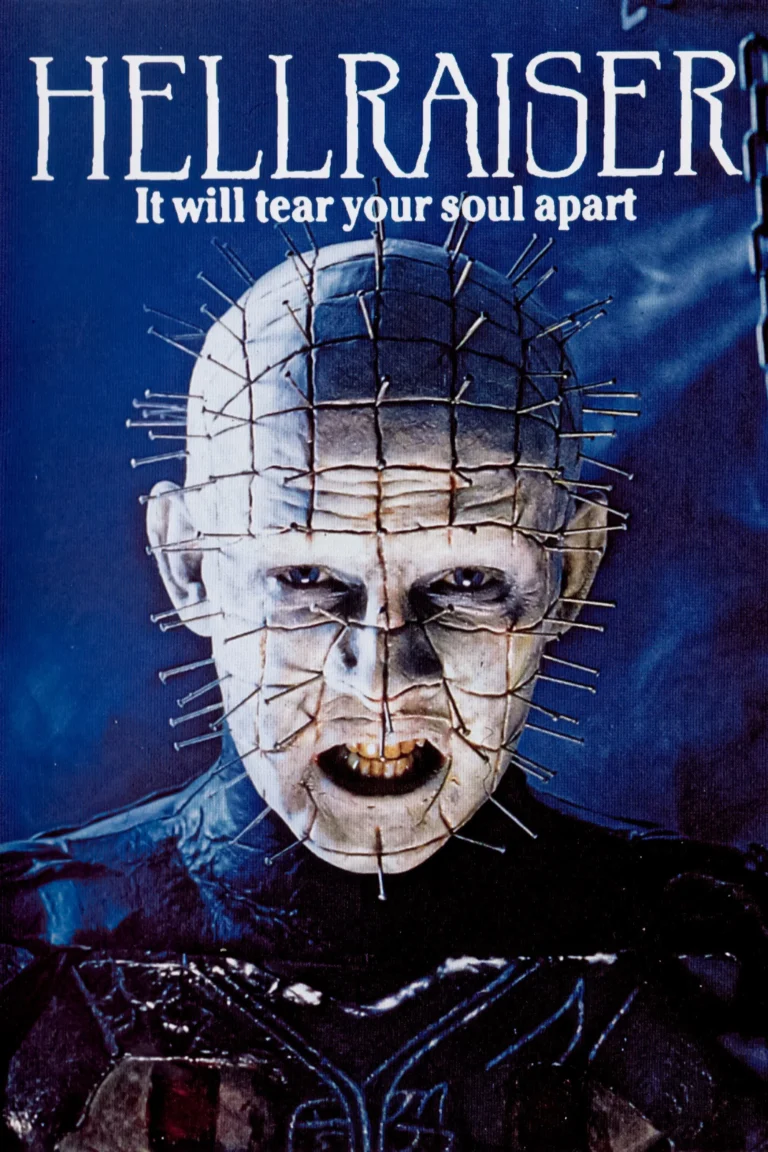
Doug Bradley’s Pinhead is an icon. There isn’t much point pretending otherwise. The voice, the stillness, the immaculate delivery and that astonishing original design became so closely associated with Hellraiser that for a long time the character essentially became the franchise mascot.
Trying to recreate Bradley would therefore have been the worst possible move. Jamie Clayton doesn’t.
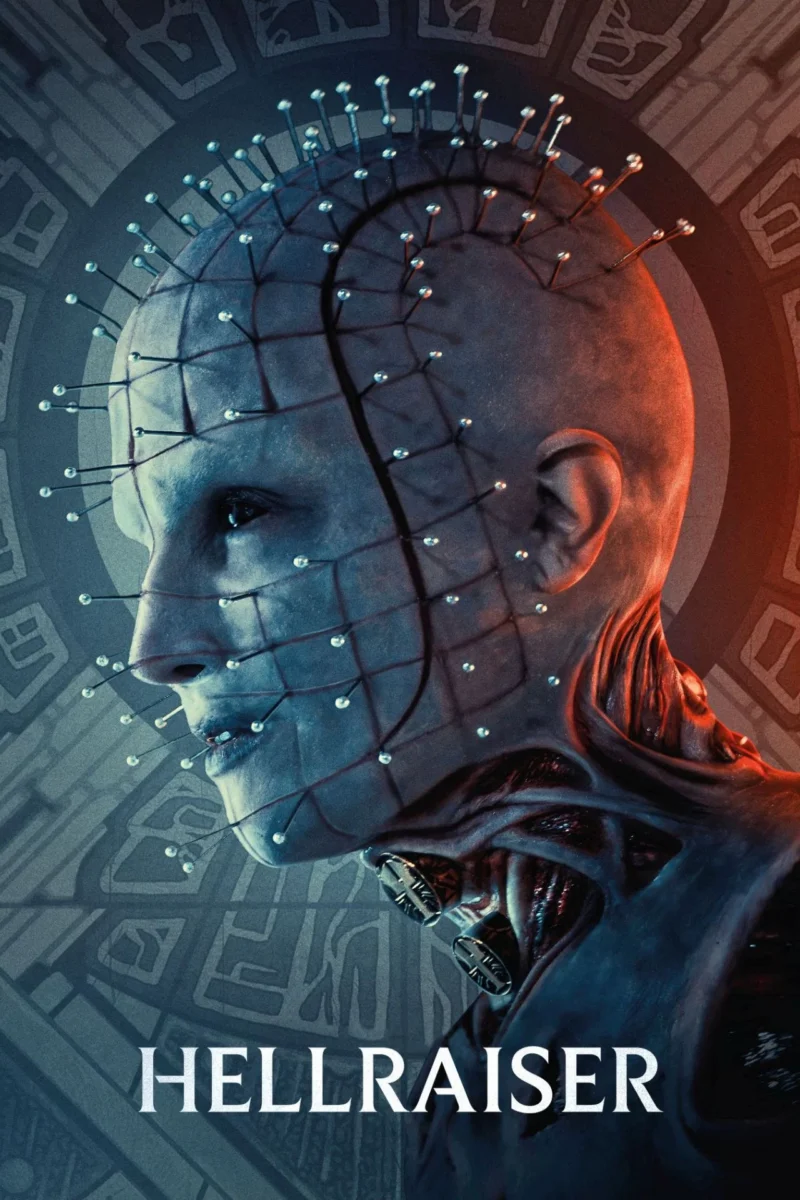
Her Hell Priest has a different presence altogether. Clayton is quieter, almost graceful, and carries the strange composure of something that isn’t particularly angry with you because anger would imply this was personal. There is curiosity there, ritual and a horrible certainty about how all this works. When the Priest explains something, you get the feeling the rules were written a very long time ago and arguing the small print probably isn’t going to help.
I particularly like this because of how easily it fits my interpretation of Hellraiser mythology. I have never had a problem with the idea that Pinhead, or preferably the Hell Priest, can be treated as a position rather than one permanently fixed individual. Elliott Spencer occupied that role. Now another entity does.
That doesn’t diminish Bradley’s version. If anything, it gives the mythology room to breathe. Once you stop requiring every Hellraiser story to eventually circle back to the same man with the same pins, there is an enormous amount of territory available. Different Priests. Different Cenobites. Different interpretations of sensation, punishment, desire and whatever passes for administration in the Labyrinth.
Clayton makes that idea work because her performance has its own identity. She isn’t wearing somebody else’s costume. The wider Cenobite redesign is equally successful.
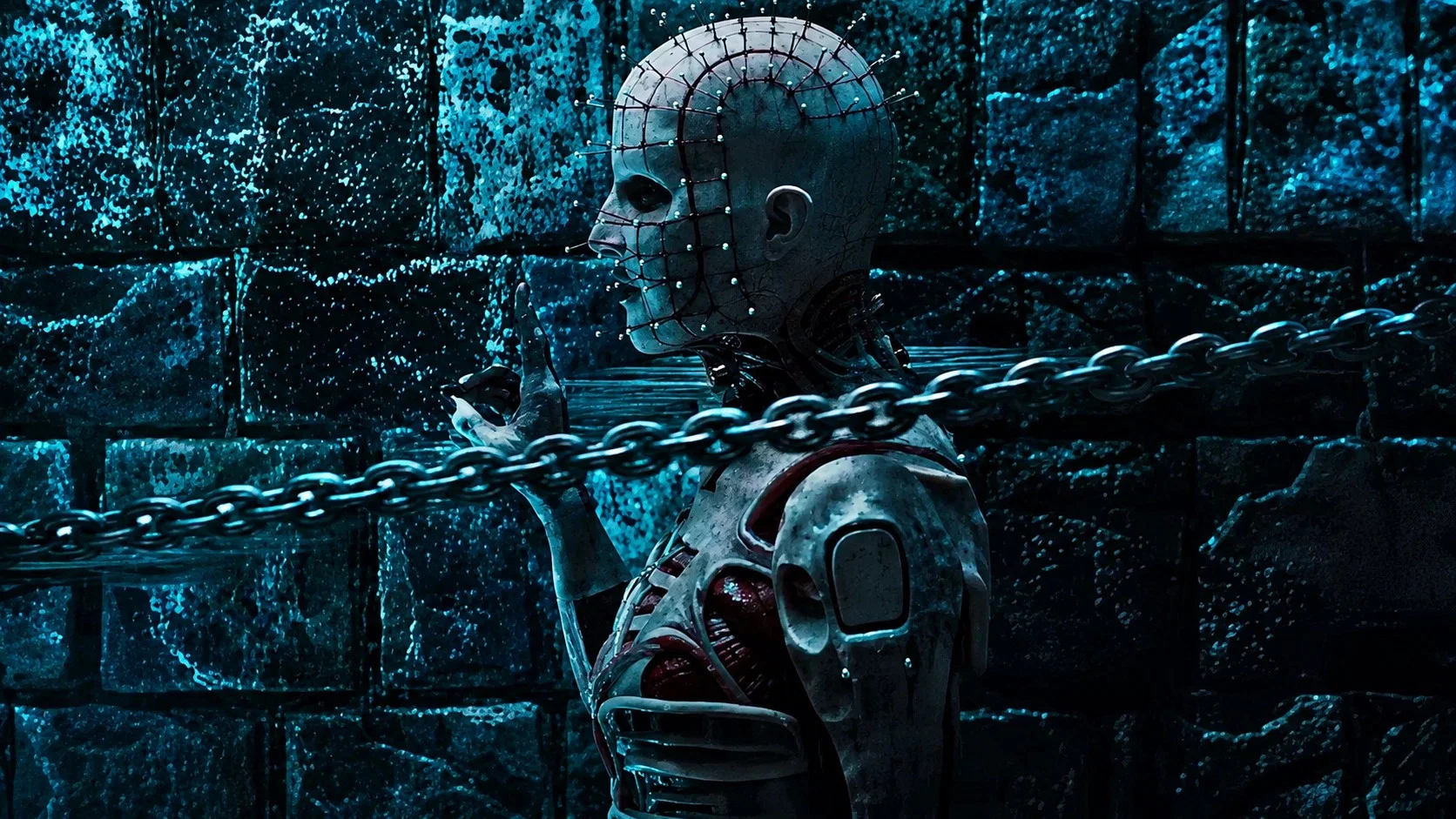
These are unmistakably creatures from Barker’s world, but Bruckner’s film wisely avoids rebuilding Butterball, the Chatterer and company piece by piece simply because we recognise them. The new designs are cleaner, almost ceremonial, while somehow becoming even more anatomical.
The clever part is the way their bodies effectively become their clothing.
kin is folded, stretched and arranged into patterns that resemble robes, collars and decorative garments. There is something beautifully horrible about it. Rather than sticking leather over mutilated flesh, the flesh itself has become part of the uniform. That gives this group a very different silhouette from the classic Cenobites while preserving the fascination that matters. Hellraiser’s creatures shouldn’t simply be monsters that jump out of cupboards. You should want to look at them even while every sensible part of the brain is recommending that you stop.
The effects help enormously. Physical prosthetics, make-up and creature work give the Cenobites genuine weight in the room, while digital effects extend what the practical work can do. CGI isn’t being asked to invent the entire creature from nothing. It is supporting something tangible.
For Hellraiser, that matters. This is a franchise obsessed with flesh. Texture is part of the language.
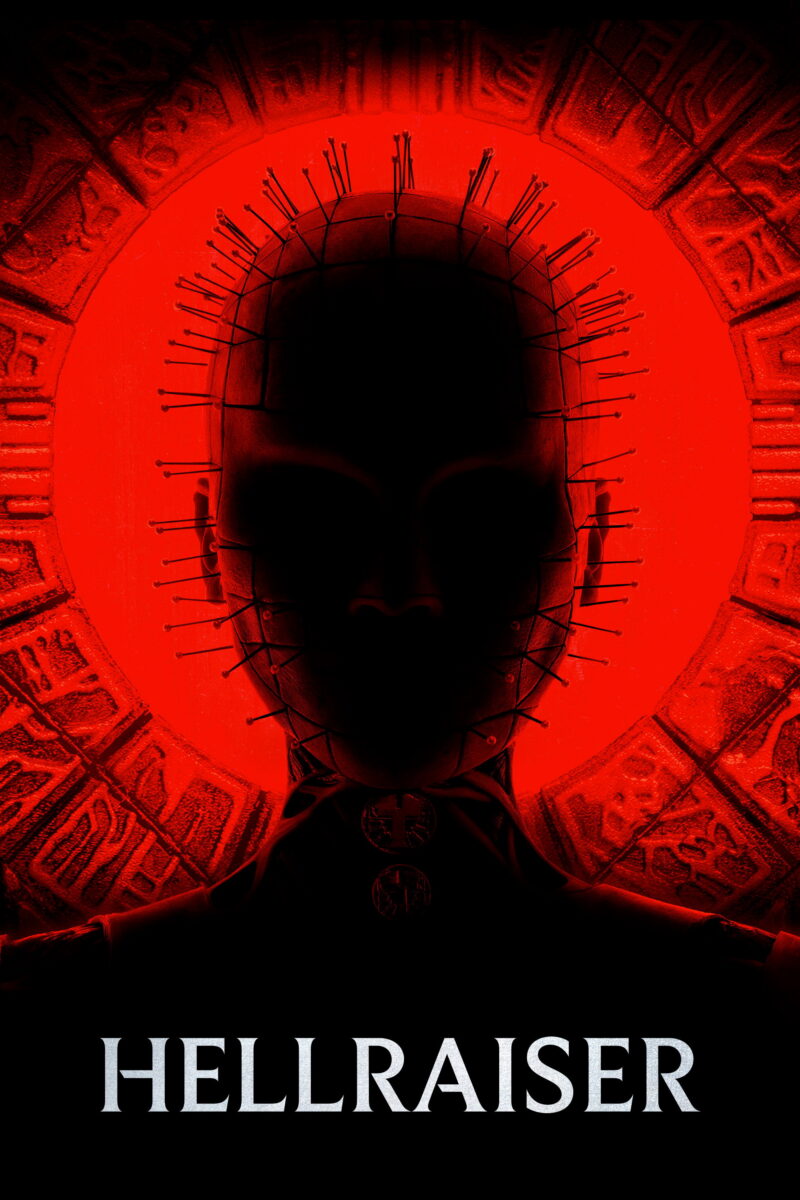
One of my favourite changes is the expanded role of the puzzle box itself. The Lament Configuration has always been one of horror’s great objects, instantly recognisable even to people who couldn’t tell you much else about Hellraiser. Here it becomes far more active. Different configurations have different purposes, progression through them matters and solving the thing becomes part of a larger system.
Suddenly the box feels less like a supernatural doorbell and more like one component in an elaborate process. That shift allows the film to broaden the mythology around it. We get rules, choices, rewards and glimpses of a larger order behind the Cenobites. The Labyrinth isn’t simply somewhere scary lurking beyond the wallpaper. It feels connected to a structure that existed long before Riley arrived and will continue quite happily after everyone involved has finished screaming. This is where the film becomes particularly interesting as a potential new branch of Hellraiser. It doesn’t explain everything, thankfully, but it gives us enough to realise there is considerably more to explore.
What are the limits of these configurations? How many different Cenobite orders exist? Is this Hell Priest one of many? How much of the Labyrinth have we actually seen? Those questions aren’t sequel bait awkwardly hanging off the final ten minutes. They grow naturally from the mythology the film establishes.
Hellraiser without throwing Hellraiser away
There will always be viewers for whom Doug Bradley is Pinhead and the first two films are where Hellraiser begins and ends. Fair enough. Those films aren’t going anywhere, and the original remains a wonderfully odd piece of British horror whose atmosphere would be almost impossible to reproduce by simply copying it. That’s precisely why I like the 2022 film taking another path.
It respects the ideas that made Barker’s creation fascinating without treating every individual detail as sacred furniture nobody is allowed to move. The Cenobites still occupy that uncomfortable territory between pleasure and agony. The box still represents dangerous curiosity. Flesh remains disturbingly negotiable. But the rules surrounding all of those things have been reconsidered. Better still, the film leaves both doors open. A newcomer can watch Hellraiser 2022 without homework, enjoy Riley’s story and understand everything necessary to follow what is happening. If they want more afterwards, there is an entire peculiar family tree waiting behind it: The Hellbound Heart, Barker’s original film, Doug Bradley’s unforgettable Hell Priest and a parade of sequels ranging from genuinely interesting to the sort of thing you discover at 1am and immediately question your decision-making.
Existing fans get something different. Another interpretation. Another Hell Priest. Another collection of Cenobites and a much broader sense of how the puzzle box might function within the Labyrinth. That’s the real success of Hellraiser 2022 for me. It proves the concept doesn’t belong to one face, one configuration or even one continuity. Barker created something flexible enough to be reinterpreted without losing the uncomfortable ideas that made it special in the first place.
Jamie Clayton deserves to return. This version of the Labyrinth deserves further exploration. And there are enough unanswered questions surrounding the configurations, the Cenobites and whatever enormous supernatural bureaucracy is keeping all those chains organised to support plenty more stories.
For long-time fans, Hellraiser 2022 adds another branch to the mythology rather than chopping the old one down. For everyone else, it’s a perfectly good place to open the box for the first time.