
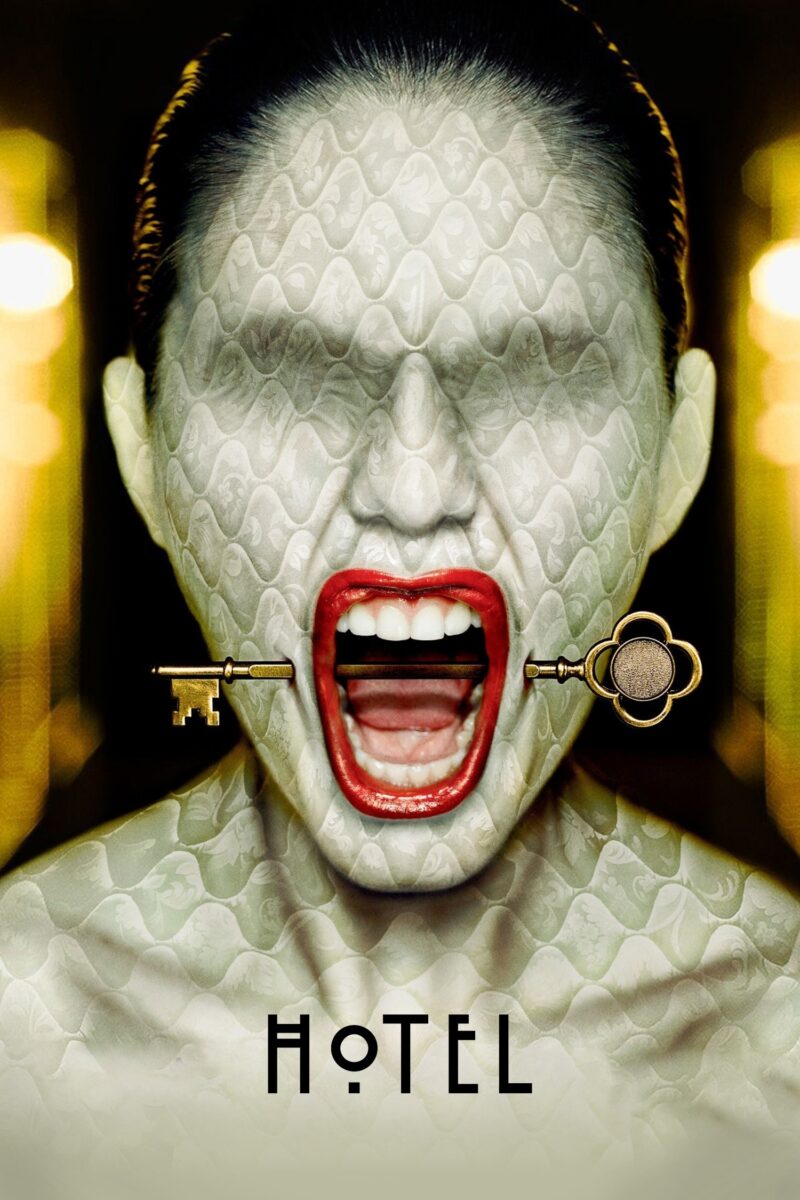
American Horror Story has never been known for restraint, but Hotel looks at the rest of the anthology and apparently decides everyone has been behaving far too sensibly. The Hotel Cortez gives the season one location in which ghosts, murderers, addicts, vampires, fashion victims and assorted Ryan Murphy regulars can keep bumping into each other without anybody needing a particularly convincing reason to leave.
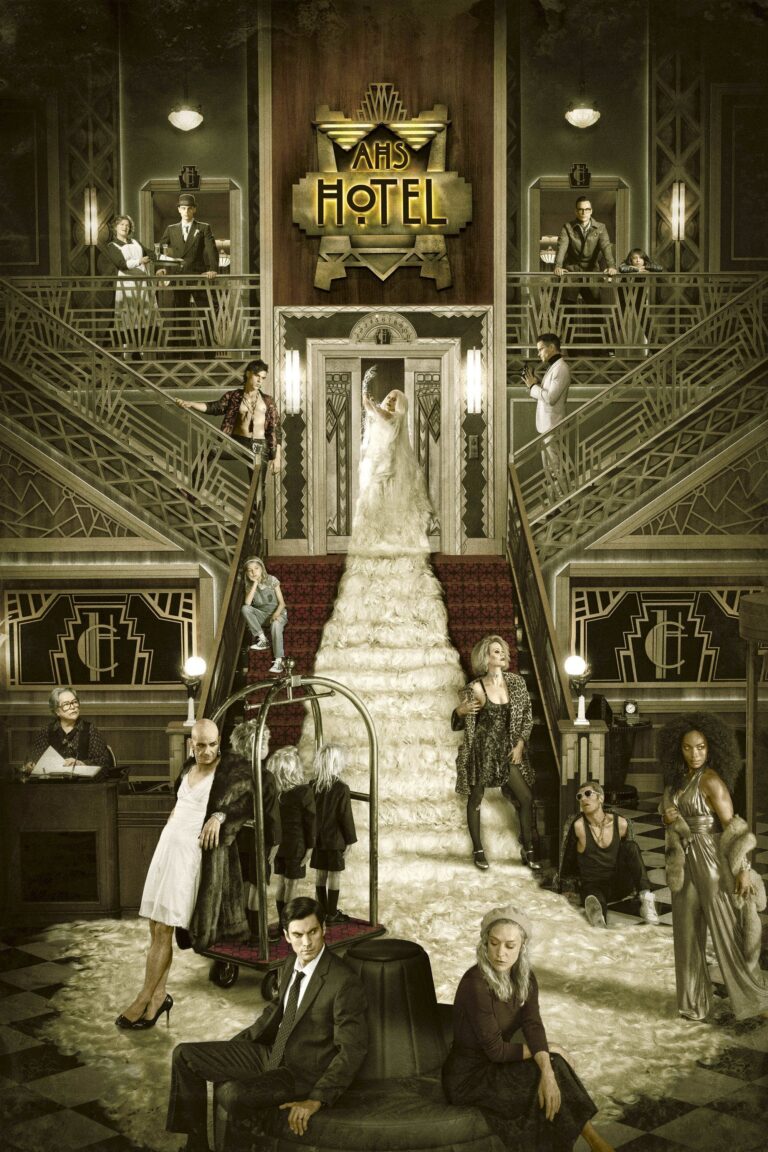
That building is the hook. The Cortez looks expensive, seductive and deeply unsafe. Long corridors disappear into darkness, rooms seem capable of holding decades of bad decisions and the Art Deco glamour never quite hides the fact that an extraordinary number of people have died here.
The obvious inspiration is the Cecil Hotel, but AHS is not trying to recreate a real building or its history. The Cortez becomes its own ridiculous place, designed by James Patrick March as though somebody asked a serial killer to combine a luxury hotel with a murder puzzle.
Evan Peters clearly enjoys the opportunity. His March is theatrical even by American Horror Story standards, complete with an accent that seems to have arrived from another decade and absolutely no interest in toning himself down. He works because Hotel gives him a world large enough to contain the performance.
Devil’s Night is probably the purest example. March gathers dead serial killers around a dinner table for an annual celebration, which sounds like the sort of idea somebody should have rejected somewhere between the writers’ room and filming. Instead it becomes one of the season’s most memorable episodes. Hotel can get away with that level of excess because by then it has already taught us that normal rules have checked out.
The Cortez belongs to its residents – Lady Gaga’s Countess was the casting everyone talked about, and understandably so. She fits Hotel almost immediately. The Countess does not enter rooms so much as occupy them. Clothes, lighting and music all seem to reorganise themselves around her, which makes the character feel completely at home in a season obsessed with beauty, appetite and people refusing to let go of what they want.
The performance works best when Gaga is allowed to be still. Hotel is already shouting from every wall, so the Countess rarely needs to. Her history with the building, Donovan and Ramona Royale gradually adds more to her than the initial image of an impossibly glamorous predator.
Sarah Paulson has considerably less glamour as Sally, and that is precisely why she stands out. Sally is damaged, needy, manipulative and trapped inside the Cortez along with the consequences of her own life. Paulson makes her unpleasant without making her disposable. In a hotel crowded with people who died badly, Sally still feels particularly stuck.
Kathy Bates provides a very different sort of presence as Iris. Put her behind the reception desk and she looks as though she has already heard every complaint a guest could possibly make, including the ones involving blood leaking through the ceiling. Iris begins as somebody almost consumed by Donovan, but gradually becomes much more entertaining when she develops interests and loyalties of her own.
Denis O’Hare’s Liz Taylor is one of Hotel’s real successes. A character who could easily have been treated as another piece of Cortez decoration becomes the emotional centre of large sections of the season. Liz’s story is about finally getting to live as herself, but Hotel wisely allows her to be funny, angry, stylish, stubborn and occasionally ridiculous along the way. She feels like a person rather than a message waiting to be delivered.
Angela Bassett is also exactly where she ought to be as Ramona Royale. She brings old Hollywood confidence to a revenge story that could otherwise disappear beneath the season’s mountain of subplots.
And there are a lot of subplots.
That is where Hotel can test the patience. John Lowe’s investigation, the Ten Commandments Killer, the Countess, the vampire children, Sally, Donovan, Ramona, Liz, Iris, March and the hotel’s collection of permanent residents are all competing for space. Sometimes the collision is exhilarating. Sometimes it feels as though the Cortez has booked every storyline in Los Angeles into the same weekend.
Wes Bentley’s John suffers most from this because the detective story initially looks as though it will provide the season with a clear route through the madness. It becomes increasingly tangled instead. Hotel often seems more interested in returning to the Cortez and seeing what its stranger residents are doing, and we can hardly blame it.
The visual design remains a huge part of the appeal. Deep reds, golds, dark wood, old fittings and rooms that seem permanently prepared for either a fashion shoot or a murder give the season an identity you can recognise immediately. It is probably one of the easiest AHS seasons to identify from a single frame.
That style occasionally overwhelms the story, but stripping it away would leave Hotel without half its personality. This is not the season to watch if you want American Horror Story behaving itself.
By the finale, the Cortez has accumulated enough ghosts that death almost starts to resemble an unusually strict residency requirement. Oddly, that allows the ending to find some warmth. Characters who spent much of the season hurting each other begin settling into whatever version of an afterlife the hotel permits. The building is still horrible. Some of its inhabitants just get better at living with being dead.
AHS: Hotel is messy, overstuffed and occasionally completely drunk on its own style. It is also packed with performances and images that are difficult to forget, from March’s dinner party to Liz Taylor taking ownership of her life.
The Cortez is certainly not the neatest stay in the American Horror Story catalogue, but neat was never really on the booking form.