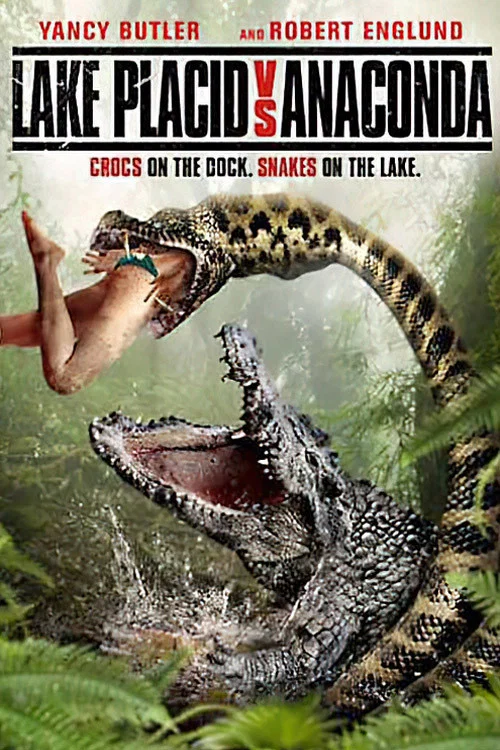


Lake Placid vs. Anaconda is what happens when two creature-feature franchises have both reached the stage where putting the monsters in the same film seems perfectly reasonable. Giant crocodiles? Present. Giant snakes? Present. Robert Englund somehow still wandering around Black Lake after everything that has already happened there? Also present. We can begin.
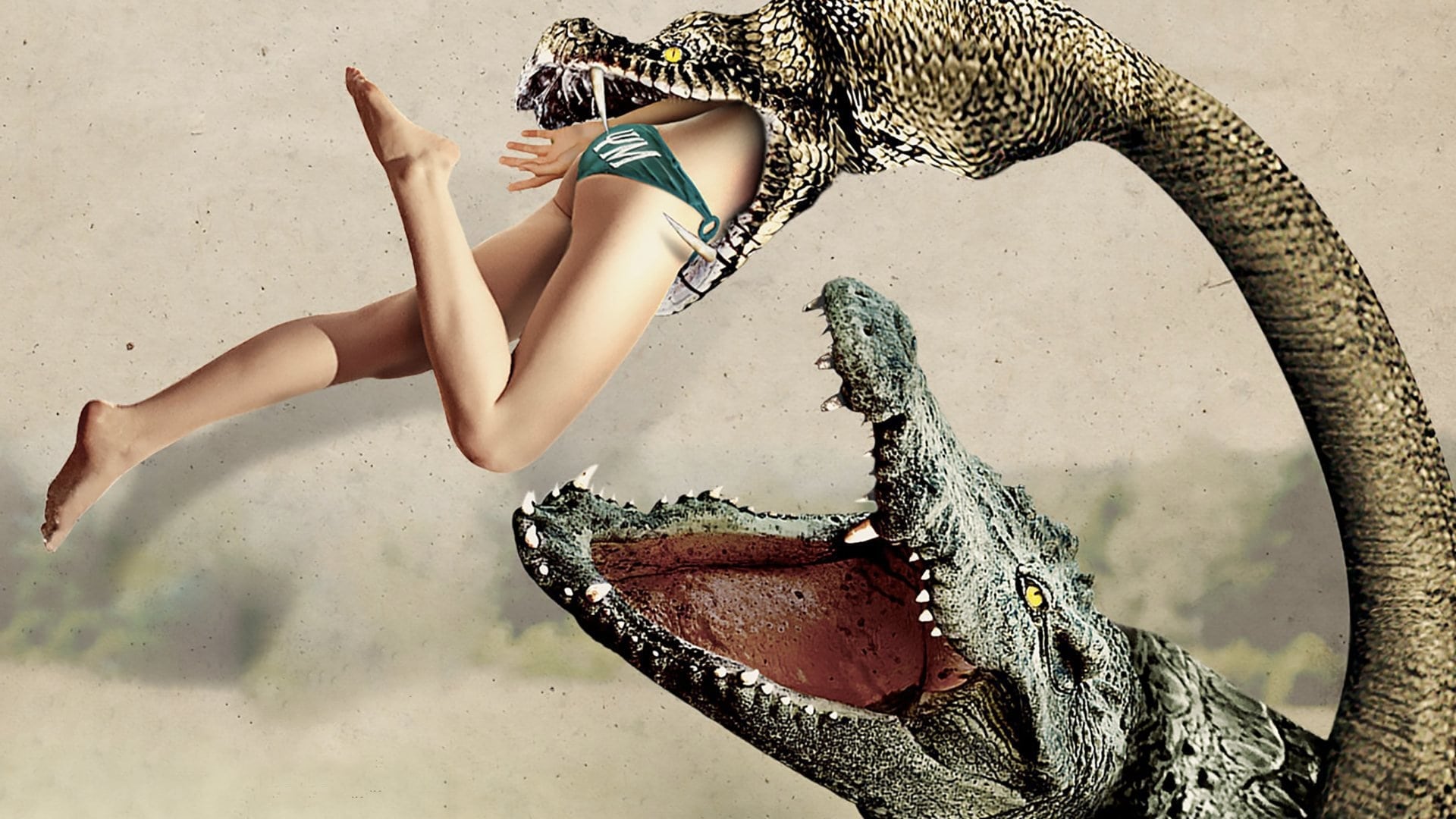
Released in 2015, the film continues both the Lake Placid and Anaconda lines and wastes very little energy pretending this crossover was demanded by dramatic necessity. The attraction is right there in the title. Eventually a very large crocodile and a very large snake are going to disagree about something.
Welcome back to Black Lake
The story picks up from Lake Placid: The Final Chapter, with Jim Bickerman once again surviving circumstances that would have encouraged most people to move several countries away. Robert Englund returns to the role and remains one of the film’s easiest pleasures.
Englund knows what sort of production he is in. There is no attempt to lend Bickerman grand tragic importance or turn him into a misunderstood antihero. He is a survivor, a nuisance and exactly the sort of person who would somehow still be involved when somebody introduces giant anacondas to an area already struggling with enormous crocodiles.
For horror fans, having Englund in the middle of this nonsense gives the film an immediate boost. Freddy Krueger may be nowhere in sight, but that familiar ability to look amused by terrible events is still very useful.
Reba has enough on her plate already
Yancy Butler returns as Reba, now serving as sheriff and once again finding that Black Lake is an appalling place to have responsibility for public safety. She gives the film a practical centre while everybody else is running around generating fresh opportunities to become reptile food.
Reba works because she has history with this world. She is not entering the story as the baffled newcomer who needs somebody to explain that the suspiciously large bite marks might be important. She knows what lives around Black Lake, knows that things can get worse very quickly and reacts accordingly. Unfortunately for her, anacondas have now joined the local wildlife.
The crossover mechanics are wonderfully uncomplicated. Experiments happen, monsters escape and the food chain receives an extremely unhelpful upgrade. From there the film can concentrate on moving characters into places where crocodiles and snakes have a fair chance of meeting them.
One of those groups is a collection of sorority girls whose trip lands them squarely in creature-feature territory. This is where the film leans harder into trashy B-movie comedy, and it is difficult to imagine anybody reaching Lake Placid vs. Anaconda while demanding restraint.
The sorority material gives the monsters a steady supply of potential victims and the film an excuse to bounce between sheriff-business, Bickerman-business and young people discovering that the local lake has rather stricter entry requirements than expected. It is silly. It knows it is silly. That distinction matters.
Better monsters than you might expect
The biggest surprise is that the creature effects are often perfectly serviceable for this level of production. Nobody is going to mistake the crocodiles and snakes for documentary footage, but they are readable on screen, they interact with the action well enough and the film generally lets you see what is attacking whom.
That already puts it ahead of the worst end of bargain-bin creature cinema, where darkness, frantic editing and blurred CGI are sometimes deployed less for atmosphere and more because the shark looks unfinished.
Here the effects are part of the fun rather than something the film seems embarrassed by. Crocodiles charge around. Snakes strike. Humans make poor geographical decisions. Eventually the title delivers on its promise and reptile politics become very heated indeed.
There is also something pleasing about two ageing monster franchises being allowed to collide without anybody trying to rebuild them as grim modern mythology. Lake Placid vs. Anaconda is not interested in explaining what giant reptiles represent about the human condition. They represent giant reptiles. Exactly the film advertised
This is not a sophisticated horror film and it would be strange to judge it as one. The characters are broad, the plotting exists largely to move people towards danger and some of the humour lands with considerably more force than other bits.
But Robert Englund is clearly enjoying himself, Yancy Butler gives the chaos a dependable centre and the creatures receive enough screen time to justify turning up. Most importantly, the film does not spend ninety minutes apologising for its own existence.
If Lake Placid vs. Anaconda sounds ridiculous to you, the movie will do very little to change your mind. If the title instead makes you wonder which enormous reptile wins, you are already exactly where the filmmakers need you.
Sometimes monster cinema really is that simple. Bring snacks.